How foreign stock works in Torn
Every destination in Torn runs its own shop with its own inventory. Those shops hold items you cannot buy in the city at all, and others you can buy at home for far more money. Flying to Mexico for cheap plushies or to Canada for drugs is one of the steadiest sources of income in the game, and unlike most money-making it scales with planning rather than with battle stats.
The catch is that stock is finite. Each shop holds a limited quantity, players drain it, and the shop refills on its own schedule. Land while a shop is empty and the trip is wasted: you paid for the ticket, spent the flight time, and come home with nothing. That is the whole problem this tracker exists to solve, and it is why timing matters more than knowing which item is profitable.
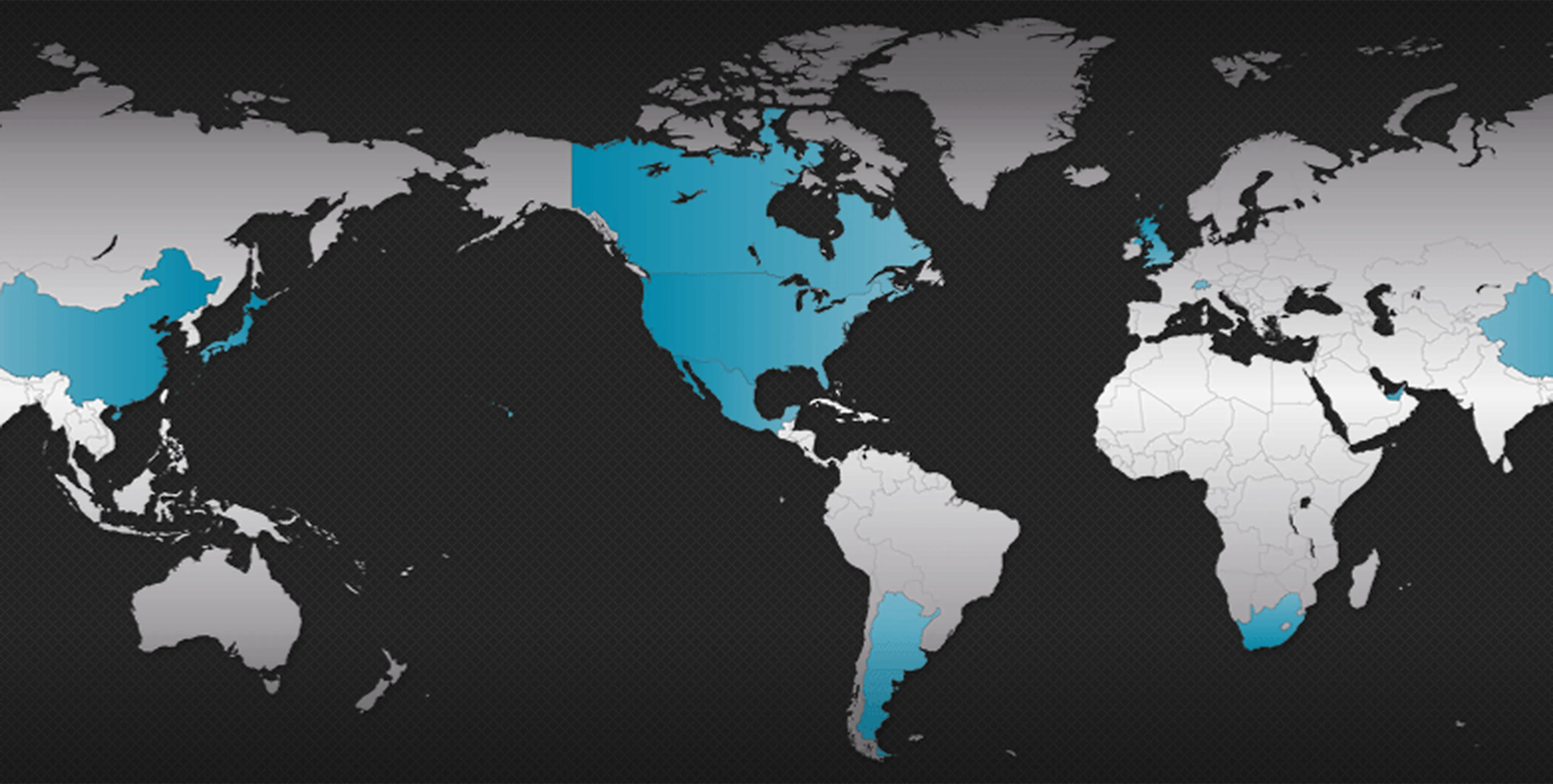
This page shows live quantities and prices for 203 items across all 11 destinations, updated continuously. The data comes from our partnership with TornTools, whose browser extension collects shop snapshots from players as they travel. No single player can see every shop at once, so the crowd-sourced feed is what makes a live map possible at all.
Travel times for every destination
Flight time decides how much of a restock window you can actually reach. Four ticket classes exist, each faster than the last: Standard, Airstrip (private island), WLT (Wind Lined Clothes) and BCT (Business Class Ticket). Faster tickets do not just save time, they change which runs are viable at all, because a shop that refills every two hours is useless to you if the round trip takes five.
| Destination | Standard | Airstrip | WLT | BCT |
|---|---|---|---|---|
 Mexico Mexico | 25m | 17m | 12m | 8m |
 Cayman Islands Cayman Islands | 33m | 24m | 17m | 10m |
 Canada Canada | 39m | 27m | 19m | 11m |
 Hawaii Hawaii | 2h 07m | 1h 29m | 1h 03m | 38m |
 United Kingdom United Kingdom | 2h 31m | 1h 45m | 1h 16m | 45m |
 Argentina Argentina | 2h 38m | 1h 51m | 1h 19m | 47m |
 Switzerland Switzerland | 2h 46m | 1h 57m | 1h 23m | 50m |
 Japan Japan | 3h 33m | 2h 30m | 1h 47m | 1h 04m |
 China China | 3h 49m | 2h 40m | 1h 55m | 1h 08m |
 UAE UAE | 4h 17m | 3h 00m | 2h 08m | 1h 17m |
 South Africa South Africa | 4h 41m | 3h 17m | 2h 21m | 1h 24m |
These are one-way times. Double them for a round trip, and remember you also spend time on the ground buying. Mexico at 25 minutes standard is the classic beginner run precisely because the whole loop fits inside an hour; South Africa at 4h 41m each way is an overnight commitment on a standard ticket.
The restock pattern most players get wrong
Players usually assume shops refill on a fixed clock, so they try to memorise restock times. That approach used to work and no longer does. Torn randomises the interval between restocks, and measured across real shops the variation is large enough that any remembered time drifts useless within days.
What stayed predictable is something different, and it is far more useful: the delay between a shop hitting zero and the next restock arriving. That delay is nearly constant for a given item in a given country, and it varies only within a narrow band around a base value specific to that item. Xanax in Canada, for example, sits near a two hour base with roughly ten minutes of spread either side.
The practical consequence is worth internalising even if you never use a tracker: the moment a shop sells out is far more informative than the moment it last restocked. If you know an item emptied twenty minutes ago and its base delay is two hours, you know when to take off. Watching for the restock itself tells you almost nothing, because by the time you see it, other players are already buying.
What actually makes a run profitable
Profit per item is the easy part: the shop price abroad against what the item sells for on the Torn market. The number that decides whether a run is worth doing is profit per hour, and three things drive it.
- Carrying capacity. Your suitcase upgrades and travel perks cap how many items come home per flight. A run worth $50k per item is worth four times more to a player who can carry forty than to one who can carry ten, on exactly the same flight time.
- Round trip time. A modest margin on a 25 minute Mexico loop often beats a fat margin on a South Africa run, because you can repeat it far more often in the same evening.
- Market depth at home. Dumping forty of the same item pushes its listing price down. The theoretical margin assumes you sell at the current lowest listing, which stops being true the moment your own stack becomes that listing.
The last point is the one that most often turns a spreadsheet-perfect run into a disappointment. Check how many units are listed near the price you are counting on before committing to a full load.
Where to start, and what changes as you grow
Shop inventories are not evenly sized. Mexico carries the widest selection at 33 tracked items, followed by Japan with 29 and the United Kingdom with 27, while Hawaii holds only 13 and the UAE 14. A bigger catalogue means more chances that something is both in stock and worth carrying when you happen to land.
That combination of the shortest flight and the largest catalogue is why Mexico is the standard first run. You learn the rhythm of buying, flying and selling without gambling two hours on a shop that may be empty. Cayman Islands and Canada come next, both still inside a comfortable loop on a standard ticket.
What changes with progression is not really which country you fly to, it is how much you bring back. Early on, capacity limits you to a handful of items, so the margin per item dominates and short repeated runs win. Once your suitcase and travel perks let you carry a large load, the calculation flips: a long flight to a distant shop becomes worth it because the payload justifies the time, and the constraint shifts from flight time to how much your local market can absorb without your own listings collapsing the price.
Reading the live map
Select a destination to see its full inventory: current quantity, shop price, and the profit per item against the Torn market. A quantity of zero means the shop is drained and a restock is pending, which as explained above is the most informative state rather than the least.
One caveat on any crowd-sourced feed, including this one: a shop is only as fresh as the last player who looked at it. Popular destinations update constantly; a quiet shop in an unpopular country may carry a reading a few minutes old. Treat the quantity as a recent observation rather than a live camera feed.
Restock predictions and trip planning
The dashboard turns the pattern above into an actual countdown. It learns each item's empty-to-restock delay from observed history and predicts arrival from the moment a shop sold out, which on high-volume items lands within a few minutes. A second model tracks the restock interval itself as a fallback for items that rarely empty. When a model has not yet seen enough history to be trusted, it says so instead of showing a confident countdown that would be wrong, which matters more than it sounds: a bad ETA costs you a wasted flight.
On top of that sit the tools that use those predictions: a departure planner that works backwards from a restock to tell you when to take off on your ticket class, an optimised itinerary for a full day of runs, ROI per hour ranked across every destination, and Discord alerts when a tracked item comes back in stock.
The live map on this page is free and needs no account. Signing in with a Torn API key unlocks the predictions and planning.